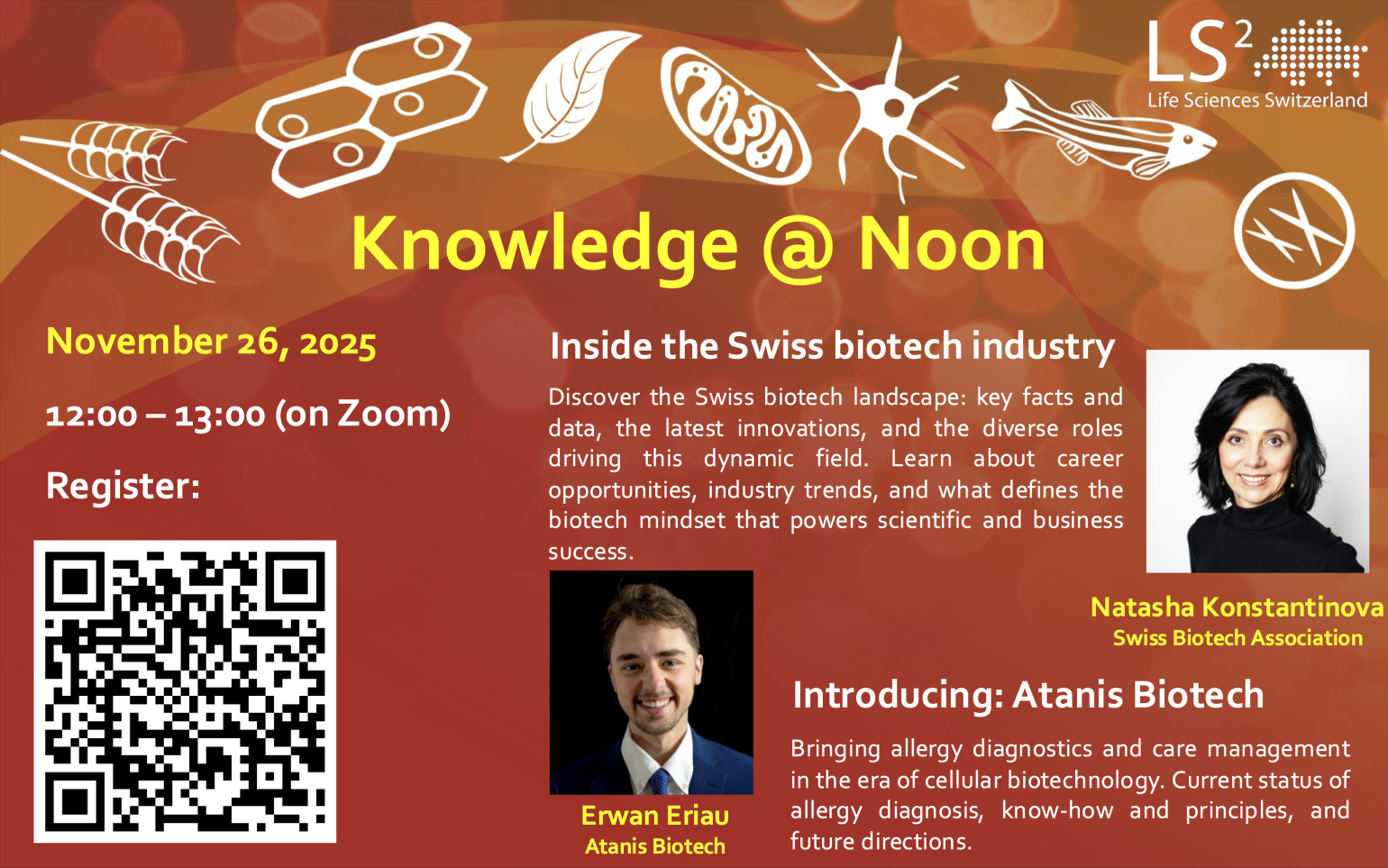
October 2026
12:00 - 12:25 David Penton Ribas: running a technology platform is often described as the exit from research. It does not have to be. In six years e-phac, the Electrophysiology Facility at UZH, went from one patch clamp rig to a portfolio of high-throughput electrophysiology combined with imaging, and soon sequencing, and from a service unit to a group with its own funding, a senior scientist and three PhD students. How do you build a facility nobody asked for, keep it funded, and end up with a research group? Six years condensed into the decisions that mattered.
12:25 - 12:50 Fanny Georgi: Have you ever wondered who keeps academia running behind the scenes? Many graduates know little about the varied careers within academic institutions. Fanny highlights roles in the “third space,” where academic and professional work intersect. Moving beyond traditional faculty and administrative categories, she explores the skills, career paths, and perspectives these roles bring to the education, research and innovation sector.
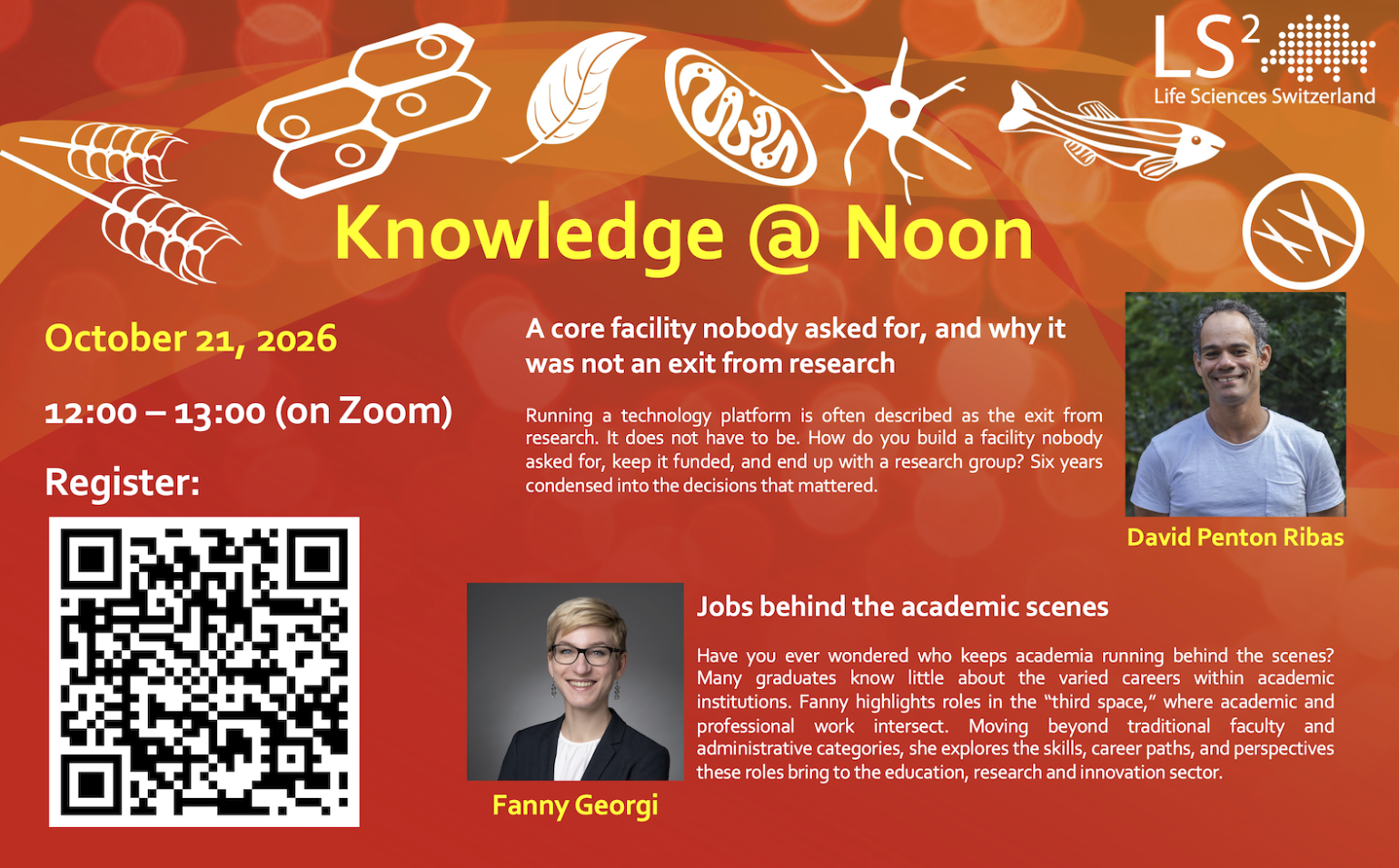
September 2026
12:00 - 12:30 Alice Reiner - Failure is something we greatly fear, particularly in our paths through education and our careers. What we don’t or can’t recognize in the moment is that often, failure is the success we didn’t know we needed. It pushes us to look differently, take a different perspective on what our future path should be. In my experience that reflection leads us ultimately to a better place. Undoubtedly, we need to engage deeply our resilience super powers but in the end failure is the place growth comes from. Alice Reiner is a scientist by training and an experienced pharmaceutical industry leader, having held a range of commercial and strategic roles at MSD across Ireland, Switzerland, Austria and the UK. Outside work, she is passionate about endurance sport and completed a solo swim across the English Channel in 2016, an experience that taught her valuable lessons about resilience, perseverance and embracing challenges.
12:30 - 12:45 Anna Boniecka (replacing Anna Stando) is a Senior Relationship Manager in wealth management based in Zürich, holding a Master’s degree in Finance and Banking and CFA Certificate in Sustainable Investing. Outside her corporate career, she is an active leader in female empowerment and financial literacy, serving as Co-Lead of Lean In Network Switzerland to help women connect, grow, and build impactful networks through regional circles and events. Alongside her professional work, Anna is a passionate soprano singer with choral performances across Switzerland and an avid enthusiast of Alpine hiking and climbing.
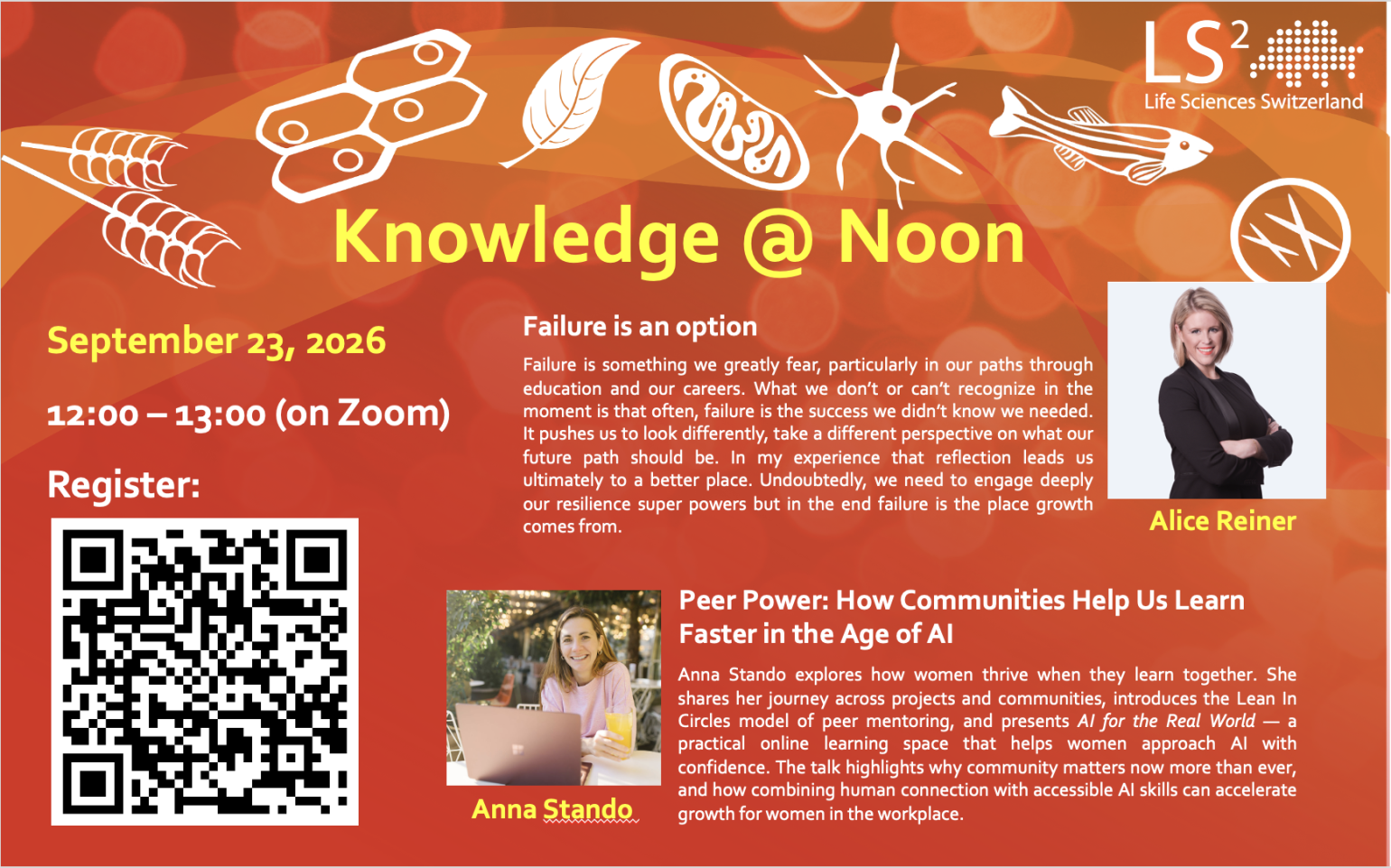
June 2026
12:00 - 12:20 Norbert Volkmar (DISCO Pharmaceuticals) talked about what it's really like to do discovery science in a small biotech coming from academia.
12:20 - 12:40 Marlene Rothe (Novartis) - after a PhD, many scientists wonder what it is really like to move from academia to the cooperate world. In this talk, Marlene shared share insights from venturing into the world of big pharma, including her observations on how it differs from an academic work environment, which transferable skills stand out during the hiring process, and what development opportunities look like in the pharmaceutical industry.
12:40 - 13:00 Q&A
April 2026
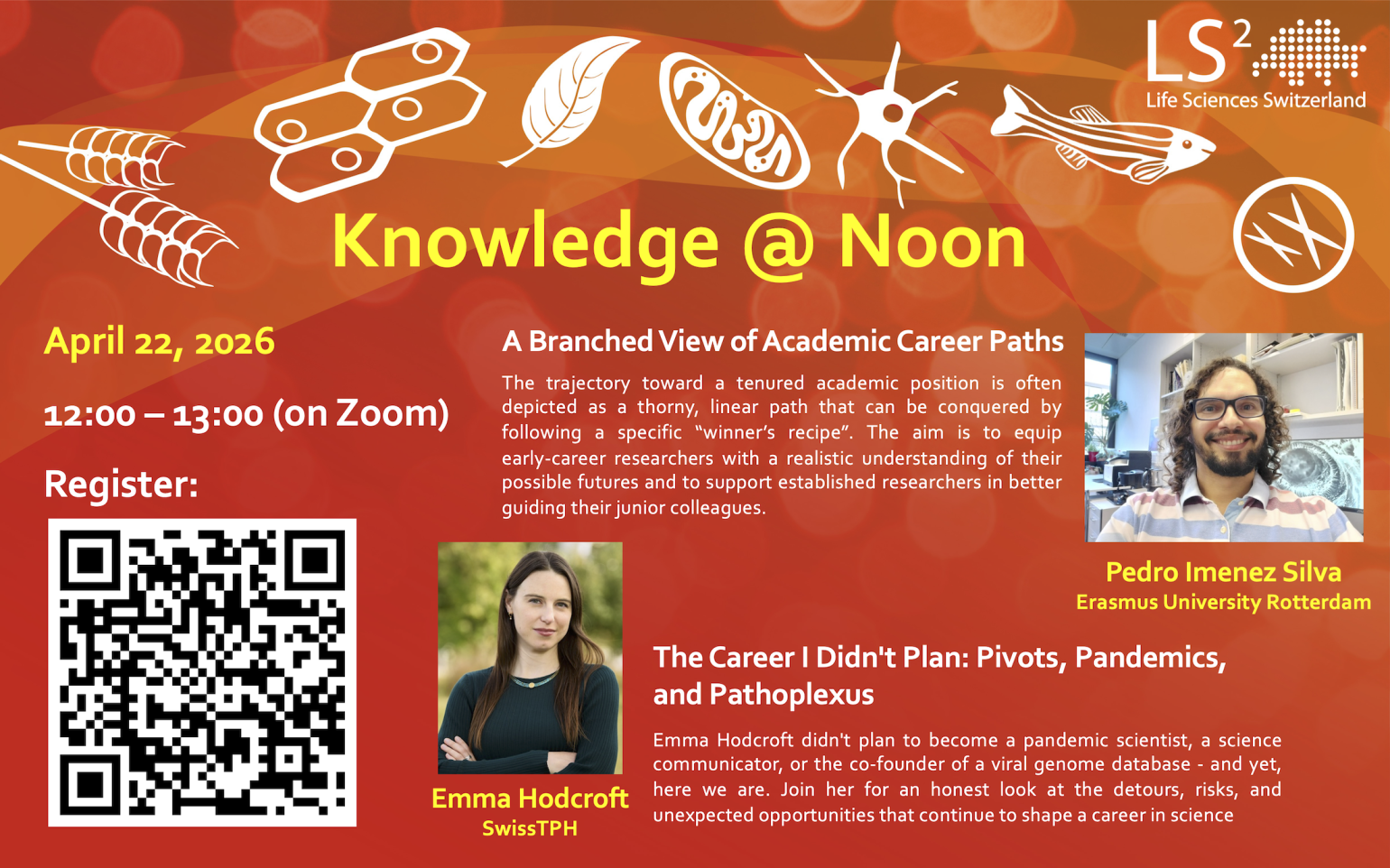
12:00 - 12:20 Pedro Imenez Silva (Erasmus University Rotterdam) talked about how the trajectory toward a tenured academic position is often depicted as a thorny, linear path that can be conquered by following a specific “winner’s recipe”. He interpreted and discussed data related to the likelihood of obtaining tenure and challenge commonly portrayed notions about the so‑called academic career path. The aim was to equip early‑career researchers with a realistic understanding of their possible futures and to support established researchers in better guiding their junior colleagues.
12:20 - 12:40 Emma Hodcroft (Swiss TPH/University of Basel) didn't plan to become a pandemic scientist, a science communicator, or the co-founder of a viral genome database - and yet, here we are. Sbe gave an honest look at the detours, risks, and unexpected opportunities that continue to shape a career in science.
12:40 - 13:00 Q&A
March 2026
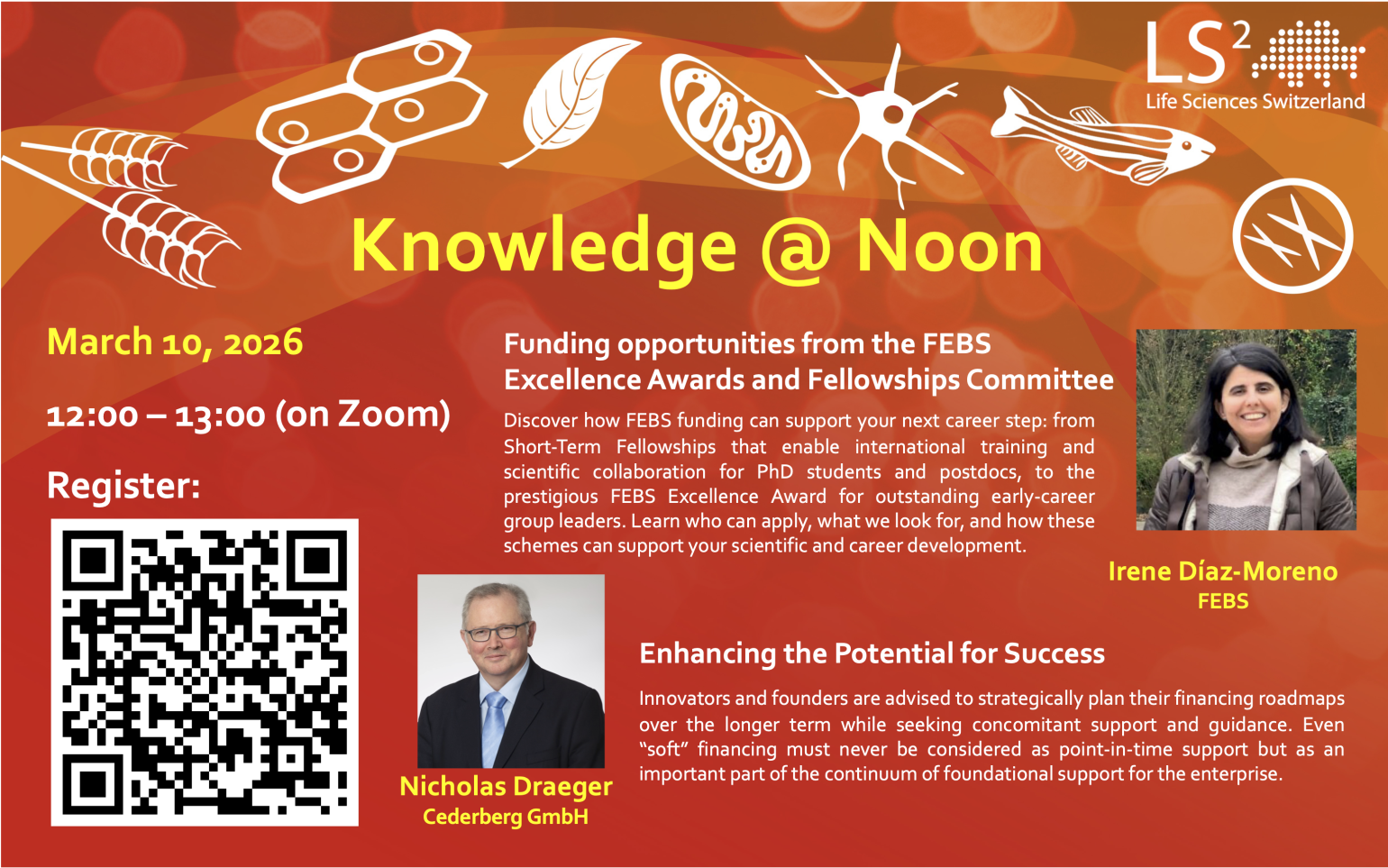
12:00 - 12:30 Irene Diaz Moreno (FEBS) talked about FEBS Short-Term Fellowships that enable international training and scientific collaboration for PhD students and postdocs, and the prestigious FEBS Excellence Award for outstanding early-career group leaders. We learned who can apply, what FEBS is looking for, and how these schemes can support your scientific and career development.
12:30 - 12:45 Nicholas Draeger (Cederberg GmbH) discussed how innovators and founders are advised to strategically plan their financing roadmaps over the longer term while seeking concomitant support and guidance. Even “soft” financing must never be considered as point-in-time support but as an important part of the continuum of foundational support for the enterprise.
12:45 - 13:00 Q&A
January 2026
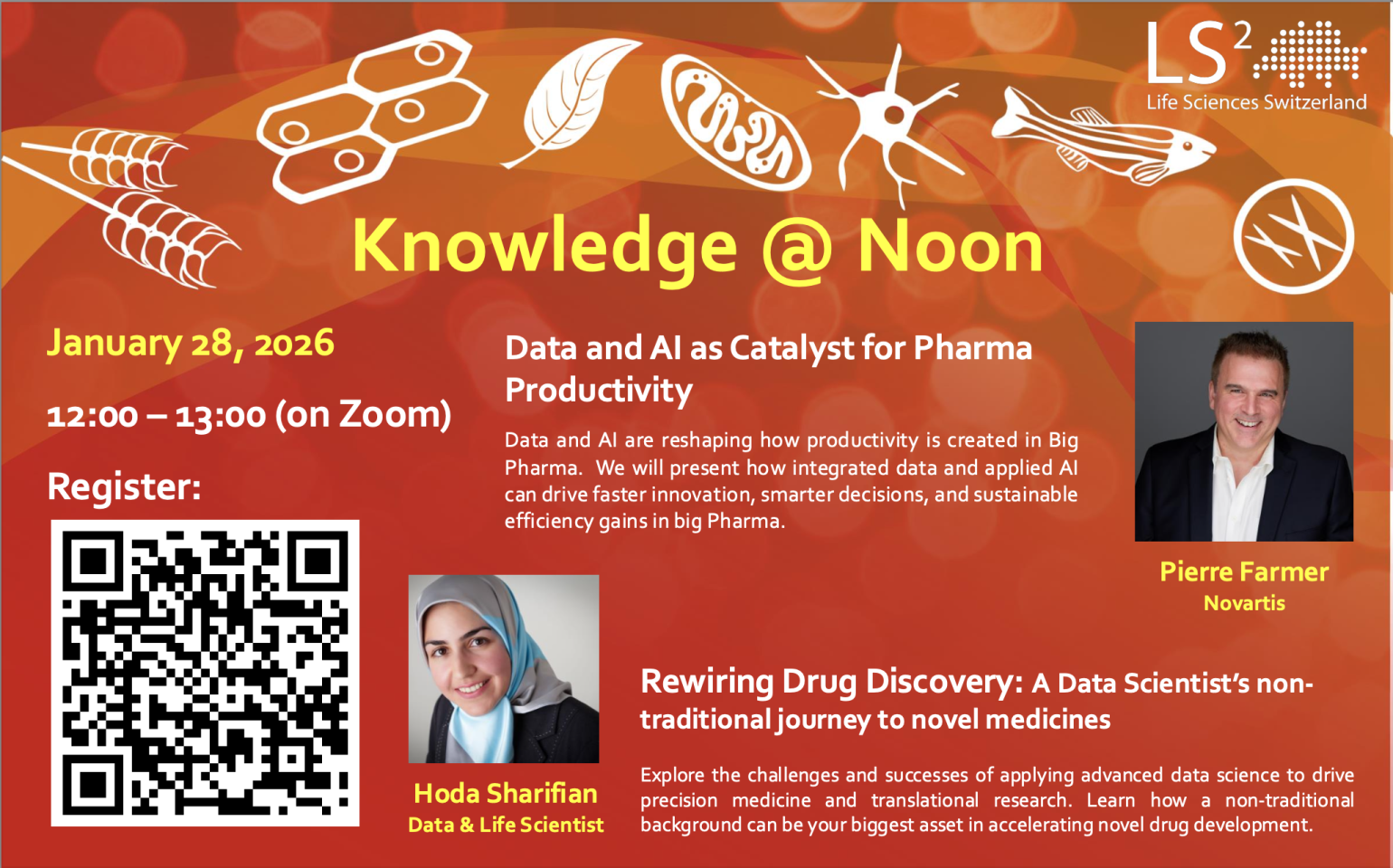
12:00 - 12:30 Pierre Farmer (Novartis) shared how data and AI are reshaping productivity in Big Pharma. His presentation showcased how integrated data and applied AI can drive faster innovation, smarter decisions, and sustainable efficiency gains in big Pharma.
12:30 - 12:45 Hoda Sharifian delved into her career transition, from circuits to computational biology, exploring the challenges and successes of applying advanced data science to drive precision medicine and translational research. She taught how a non-traditional background can be your biggest asset in accelerating novel drug development.
12:45 - 13:00 Q&A
November 2025
12:00 - 12:30 Natasha Konstantinova provided an insider’s view of the Swiss biotech landscape, exploring what drives its remarkable success and what defines the “biotech mindset” that connects scientific excellence with entrepreneurial vision. She discussed how collaboration, innovation, and adaptability have positioned Switzerland as a global hub for biotechnology and will highlight current trends, emerging areas of research, and new career opportunities within the field.
12:30 - 12:45 Erwan Eriau introduced the innovative work of Atanis Biotech, transforming the way allergies are diagnosed and managed in the era of cellular biotechnology. He outlined the current limitations of traditional allergy diagnostics and explain how cellular-based approaches can offer more precise, personalized insights into immune responses. Erwan also shared the scientific principles behind Atanis Biotech’s technology and provide a forward-looking perspective on how these advances could reshape allergy care in both the near and long term.
12:45 - 13:00 Q&A